Yoga
Yoga Mat vs. Yoga Towel: What Each Is For
A mat, a full-length yoga towel and a hand towel do different jobs. Here is how to choose a setup around the class you actually take.
September 14, 2026
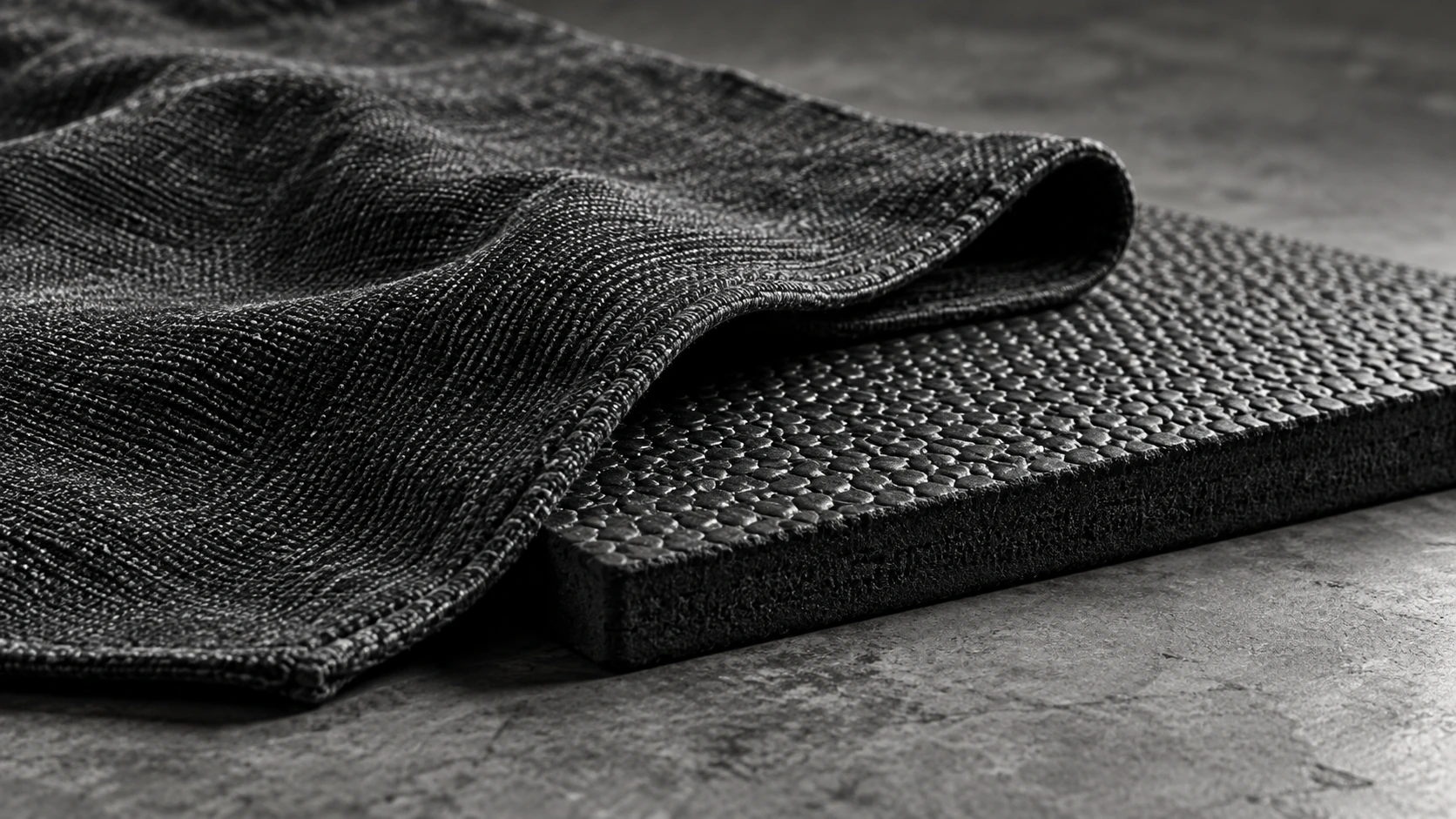
A yoga mat and a yoga towel can work together, but they are different pieces of equipment. If you are building your first setup, start with the class you plan to attend and the mat you will use. Then decide whether a towel has a job to do.
That is a more useful starting point than buying everything in the photograph.
Start with the surface beneath you
Your mat provides the main practice surface. Its size determines the space you have; its construction and thickness affect how it feels against the floor. A towel laid over it changes the surface touching your hands and feet. It does not turn a short mat into a longer one or supply the same structure as a thicker mat.
Think of your setup in layers: floor, mat, optional towel. If something moves, identify which layer moved. A towel bunching under your foot is a different problem from a mat sliding across the floor. Buying a new top layer before understanding that distinction may leave you with the same problem.
A full-length towel has a specific role
A mat towel is intended to cover much of the practice surface. Depending on its design, it can provide an absorbent layer and a different feel under your hands and feet. Construction matters; the phrase “yoga towel” does not tell you how every product works.
Manduka recommends pairing its PRO mat with an eQua or yogitoes towel when hands and feet get sweaty or during hot yoga. That is guidance for that mat system, not a rule that every yoga mat needs a towel. Manduka PRO product guidance.
Other manufacturers take a different approach. Liforme describes its Classic mat's absorbent surface as designed for sweaty practice without requiring a mat towel. These are manufacturer descriptions, not a head-to-head Breath Metal test. They illustrate why the mat you own should influence the next thing you add. Liforme mat buyer's guide.
Keep a hand towel in its own category
A small towel for wiping your face serves a different purpose from a full-length mat cover. If wiping sweat is the only job you need done, begin there. You do not automatically need to cover your entire mat.
If you want a smaller towel specifically under your hands, check that the product is intended for that use. A towel that works well for drying your face may be awkward as a practice surface. Before class, decide where it will sit when you are not holding it, so it does not become something you keep moving out of your way.
Match the purchase to a real problem
Use these questions before choosing:
- What does the class require? Ask the studio whether you need a mat towel, a hand towel, your own mat, or some combination.
- What is happening on your current mat? Note whether the issue is sweat, surface feel, coverage, or movement.
- What does the mat maker recommend? Read the instructions for your model.
- What will you maintain? A towel adds another item to wash, dry and remember to pack.
At a first class, a rental can help you learn what you like before committing to an entire setup. Ask what the studio provides and what rental options are available.
Make one useful decision
For your next session, write down the one job you want a towel to do. If a full-length cover makes sense, measure your mat and use our guide to choosing a yoga towel that fits.
Keep that practical requirement in mind as you explore Drop 001. The right gear earns its place by supporting the practice you actually do.
Sources
- Manduka PRO Yoga Mat — product guidancemanufacturer
- Liforme Mat Buyer's Guidemanufacturer