
Gear
Yoga Mat Thickness: Cushion, Stability, and Floor Feel
Thicker isn't automatically better. Learn how mat thickness, firmness, and your floor change comfort and balance—and what to test before buying.
September 25, 2026
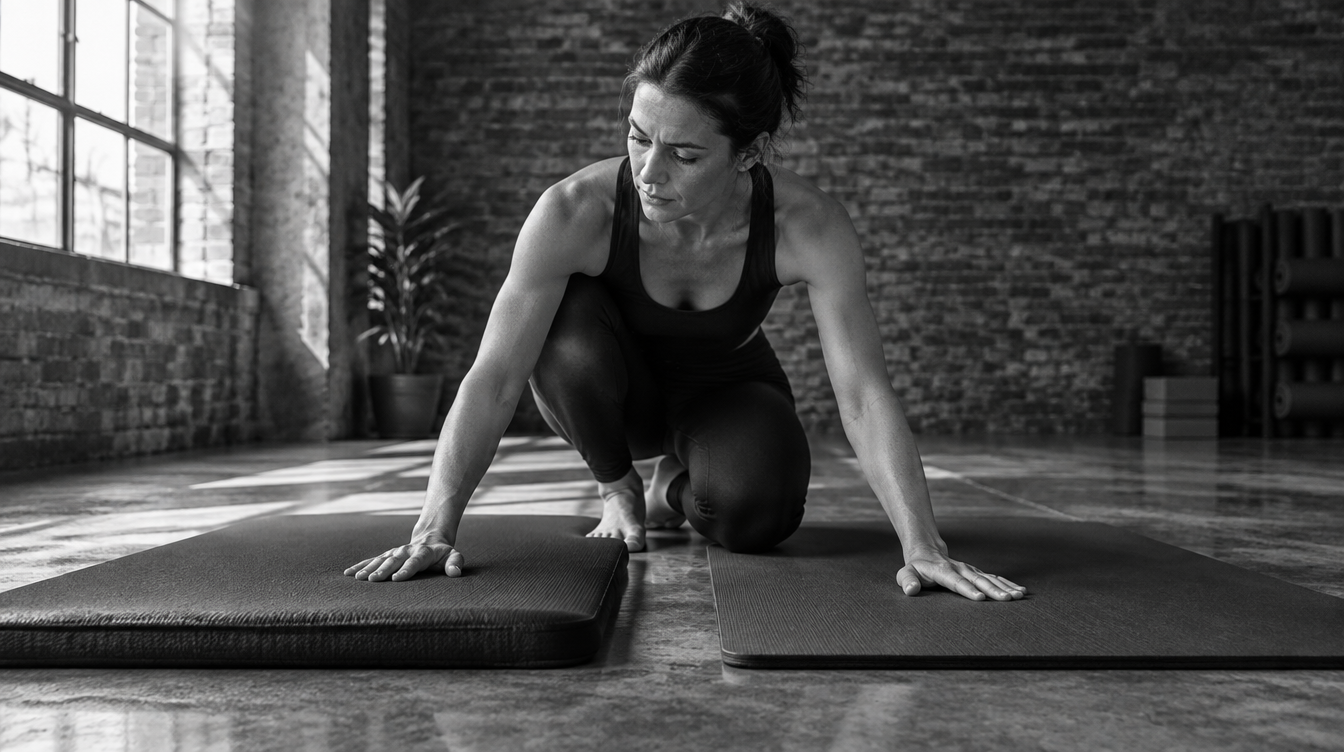
A yoga mat has two competing jobs: soften contact with the floor and provide a steady surface to move on. More padding can make kneeling more comfortable. Too much give can make a standing balance feel like work you didn't intend to add.
The thickness printed on the label helps narrow the choice. It doesn't tell you how the mat behaves under your weight. Start with millimeters, then check firmness, flooring, and the positions you actually practice.
What thickness changes—and what it doesn't
Three qualities matter here:
- Cushion: how the mat softens contact under knees, elbows, hips, and other contact points.
- Stability: how little the surface shifts or compresses as you load it.
- Floor feel: how directly you can sense pressure through your hands and feet into the ground.
Within similar construction, increasing thickness generally adds cushioning and reduces direct floor feel. If that extra material compresses substantially, it can also make balance less predictable.
Grip is a separate question. A thick mat can be slippery; a thin mat can grip well. Extra millimeters won't fix a surface that doesn't suit sweaty hands or a mat that slides across your floor.
A practical guide to thickness ranges
These ranges are shopping starting points, not performance standards. Manufacturer guides disagree on the exact sweet spot, and thickness alone can't establish comfort or suitability.
Around 1–2 mm: minimal padding, easier packing
Thin travel mats make sense when packing space matters more than cushioning. Expect to feel a hard floor clearly, especially during kneeling and seated work.
Check the listed weight and packed dimensions rather than assuming every thin mat is light or foldable. Material and construction still matter.
Choose this range deliberately for portability or direct floor feel—not because thinner equipment signals a more advanced practice.
Around 3–5 mm: a useful starting range
For a practice mixing standing poses, transitions, and floor work, this is a sensible range to compare first.
A firm mat here can offer a relatively direct connection to the floor without removing all padding. The trade-off usually becomes obvious when you kneel: the surface may feel excellent under your feet but less comfortable under a concentrated contact point.
If you're undecided, testing a firm mat around 4 mm gives you a useful baseline. It isn't a universal answer.
Around 6 mm: more cushion, construction matters
This range is worth considering when your practice includes substantial floor work or your usual surface is particularly hard.
A firm 6 mm mat needn't feel like a soft exercise pad. A softer one may let your foot sink enough that balancing requires more adjustment. Compare the actual compression rather than rejecting or choosing it on thickness alone.
Around 8–12 mm and beyond: prioritize floor comfort
Thicker, soft foam mats can suit sessions spent mostly seated, kneeling, or lying down. They become less convincing as an all-purpose choice when standing balances occupy much of the session.
The question isn't whether a mat feels luxurious when squeezed. It's whether it remains steady when loaded through one foot or both hands.
Firmness matters as much as the number
Two mats labeled 5 mm can feel substantially different. One may compress only slightly; another may flatten beneath your knee and leave you feeling the floor anyway.
Density and firmness are related material characteristics, but they aren't interchangeable labels. Don't treat “high density” as proof of a particular feel. Look for clear construction information, and test the mat if possible.
Pressing a thumb into a sample gives a rough impression. Loading it in a pose tells you more. Notice whether the surface gives a little and settles, or keeps deforming as you shift pressure.
More softness isn't automatically more useful support. Equally, a very firm mat isn't a better choice if floor contact distracts you throughout practice.
Account for the floor underneath
A mat is only one layer of the setup.
On wood, tile, or concrete, limited cushioning is easier to notice during floor work. On carpet, the floor already yields, so adding a soft mat can make standing positions feel less settled.
If possible, compare mats on a surface similar to the one you use most. A showroom test on carpet won't tell you exactly how kneeling will feel on your kitchen tile.
For home practice, also check that the mat lies flat and stays put. Thickness doesn't compensate for a shifting base.
Test three positions before choosing
Use familiar, comfortable positions rather than turning a gear test into a flexibility test.
1. Hands and knees
Place your hands beneath your shoulders and knees beneath your hips. Shift gently forward and back.
Notice contact pressure, how far your hands sink, and whether the material bunches. Stop if the position hurts; pain isn't useful product-testing data.
2. A simple standing balance
Near a wall, stand on one foot and keep the other foot low. Keep the test modest and repeat it on each mat.
Some wobbling is normal. You're comparing whether the surface adds noticeable movement beneath the standing foot, not grading your balance.
3. Seated or lying floor work
Spend a short period in a familiar resting position. Check whether contact with the floor is comfortable enough that you're not repeatedly repositioning solely because of the surface.
If only kneeling needs more padding, a small folded blanket or dedicated pad may be more practical than making the entire mat softer. Move that extra layer aside for standing work. For persistent pain or medical questions, consult a qualified professional rather than expecting equipment to solve them.
Takeaway: choose the trade-off you can use
For mixed practice, start by comparing firm mats around 3–5 mm. Consider more cushioning when floor work dominates, and thinner options when packing space or direct floor feel takes priority.
Then let the loaded test decide. The useful mat is the one that provides enough contact comfort without adding unwanted movement beneath you—not the one with the biggest thickness number.
Sources
- The Complete Guide to Yoga Mat Thickness – Tatagoyogaweb / tatagoyoga.com
- How to Choose the Best Standard Thickness Yoga Mat – Hugger Muggerweb / huggermugger.com
- Is a 4mm or 6mm Yoga Mat Better? How to Choose Your Grip – Hugger Muggerweb / huggermugger.com
- Finding Balance With a Thick Foam Yoga Mat | Top Benefits | Yoga Design Labweb / yogadesignlab.com
- Are Thick Yoga Mats Good? Choosing Your Ideal Cushioning – Hugger Muggerweb / huggermugger.com
Build a durable practice with gear that suits the way you move.
Get drop access