Yoga
Yoga Blocks and Straps: How to Choose and Use Them
Blocks change the distance to the floor. Straps extend your reach. Here is how to compare both, ask better questions and use props without turning them into tools for forcing a pose.
September 14, 2026
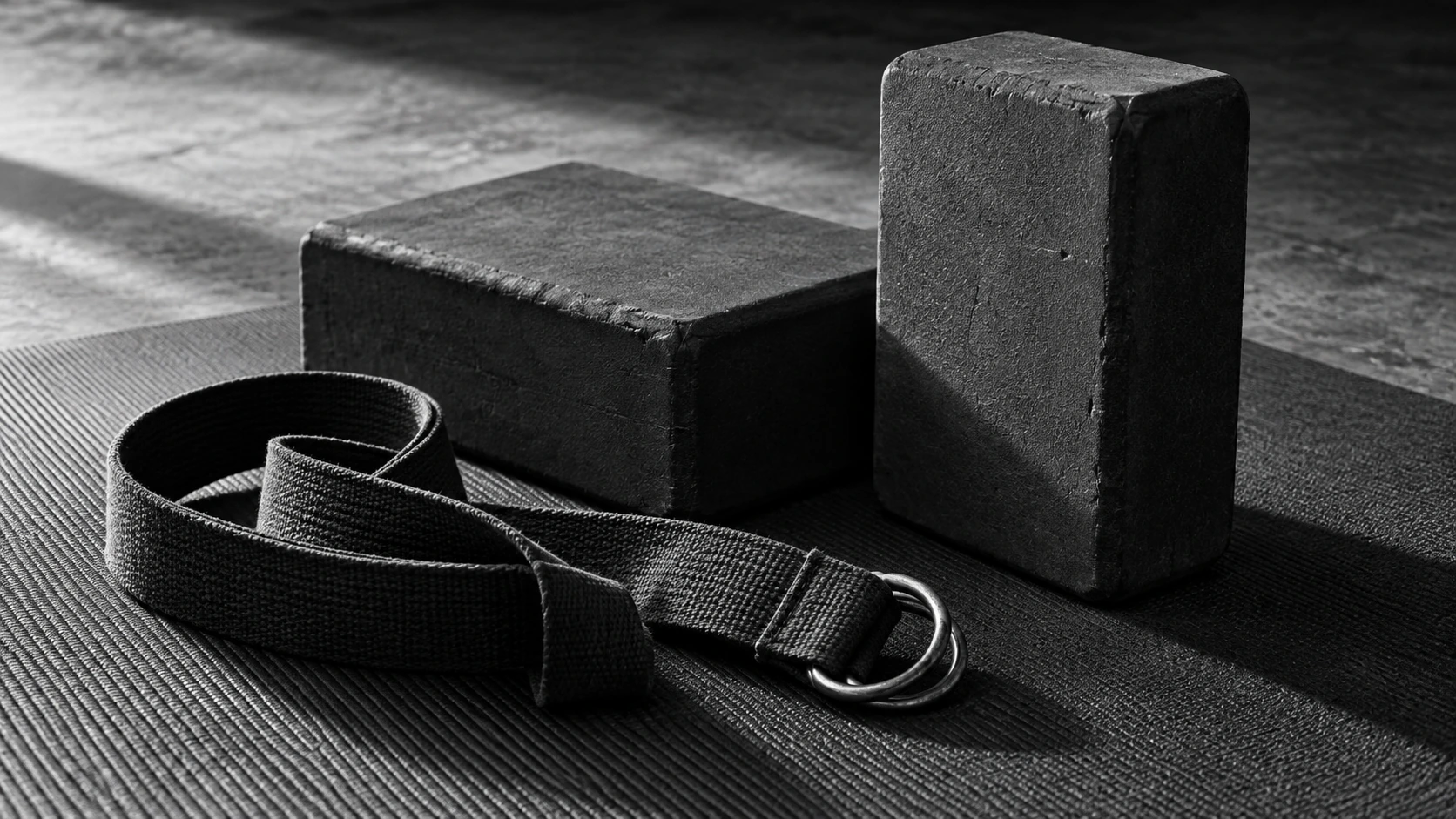
A block beside your mat and a strap within reach give you choices. The useful question is what the prop helps you do in the practice you are learning.
If you have seen someone place a hand on a block or hold a strap around a foot, it can look self-explanatory. Details still matter: the height, the direction of support, the slack and the way the teacher intends you to use it. Start by understanding the task before buying a pile of equipment.
Choose a block you can handle comfortably
A conventional rectangular block offers different heights when turned onto different faces. It can bring a surface closer to your hand instead of requiring you to reach all the way to the floor. Ask your teacher which position fits the pose you are working on.
Manduka describes its cork blocks as heavier and firm, while its foam options are lighter with a softer feel against the body. Those are useful features to compare, but materials and construction vary by product. See Manduka's block guide.
Before buying, try the studio's props if available. Can you grip the edges comfortably? Is the block easy to turn and reposition? Does it sit securely on the surface you will use? Check the actual dimensions on the listing rather than assuming every full-size block is identical.
If a class uses one under each hand, a matching pair keeps the setup consistent. Ask whether the class provides them before carrying your own back and forth. A useful purchase is one you understand and expect to use.
Choose a strap by the setup
A yoga strap provides extra length between your hands and the part of the body you are reaching toward. Manduka's guide lists different strap lengths and explains that longer versions offer more room for loops and some supported arrangements. The guide also emphasizes gentle use without pulling forcefully. Read its strap guidance.
Check more than the length. Feel the webbing in your hand, examine the buckle and learn how that particular closure threads. Ask your teacher to demonstrate the loop used in class. You should be able to change its length and release it without fumbling.
Do not choose a strap solely because it looks like one in a photograph. If you need it for a specific class, the teacher's setup is the most useful shopping reference.
Learn one use at a time
In your next class, ask for one block example and one strap example appropriate to what you are learning. Let the teacher show the placement, then try adjusting it under their guidance. Ask what you should notice and when to change the arrangement.
A practical block question is, “Which height lets me follow this instruction comfortably?” A useful strap question is, “How much slack should I leave here?” These questions give you more to work with than simply asking whether your pose looks right.
Leave ambitious internet demonstrations for a class where someone can explain them. A prop is not an invitation to hang, suspend body weight or invent a loaded setup beyond its intended use. Follow the manufacturer's instructions and the guidance for your class.
Keep the equipment ready
Check the prop before practice. Look for a split block, damaged webbing or a closure that no longer holds as intended. Follow the specific product's cleaning directions; material names alone do not establish a care method.
At the end of class, make a note of the setup you understood. “Two matching blocks, broad face down” is more useful for your next visit than a photo you cannot explain.
Next time you practice, ask your teacher to walk you through one prop choice. Build your setup gradually, and explore Breath Metal's yoga gear for the practice around it.
Sources
- A Guide to Yoga Blocksmanufacturer
- A Guide: How to Use Yoga Propsmanufacturer