
Yoga
Yoga Before or After Lifting? Choose the Order That Serves the Session
Brief movement before lifting, easier holds afterward, demanding yoga on its own terms. Choose your session order by the work you want to do well.
September 25, 2026
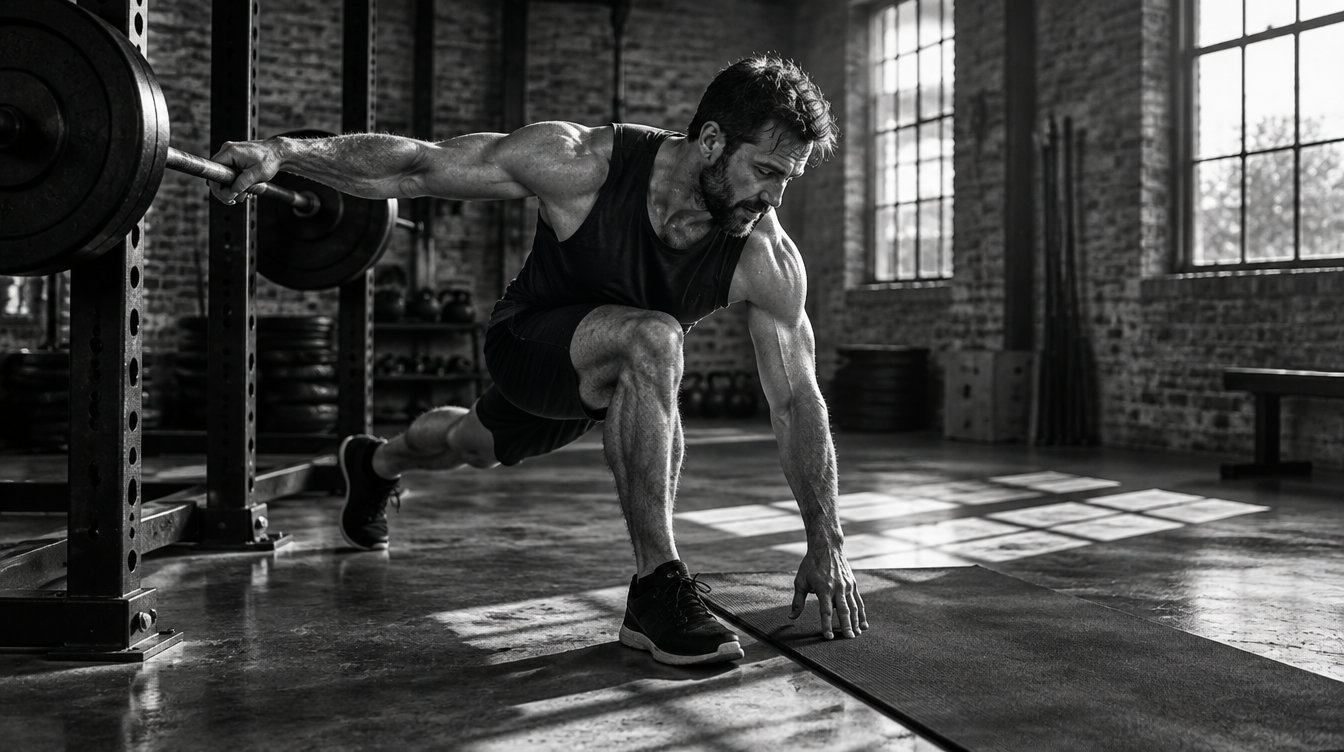
If lifting is the priority, do your serious lifting before a demanding yoga practice. A few minutes of easy, moving yoga can fit into the warm-up. Longer stretches usually make more sense afterward or in a separate session.
That is a useful default, not a rule for every athlete or every class. Five minutes of cat-cow and moving lunges is different from a class full of long holds, repeated push-up transitions, and challenging balances. The label “yoga” tells you less than the actual workload.
Start with the work you want to do well
Before deciding the order, identify the main task: heavy squats, explosive lifts, ordinary strength work, or a yoga skill that needs concentration and control.
Put that task first when practical. The trade-off is straightforward: work done beforehand can leave less energy for what comes next.
- Lifting matters most today: use brief, easy movement beforehand; save a longer yoga practice for later.
- Yoga skill matters most today: practice while fresh, then adjust the lifting session to the effort already spent.
- Both sessions are demanding: separate them rather than assuming one can serve as the other’s warm-up or cooldown.
A hard yoga class after lifting is still another training session. Changing the order does not erase its workload.
What the stretching research actually tells you
Reviews of pre-exercise static stretching suggest that prolonged holds can temporarily reduce subsequent maximal strength or power. Duration and the surrounding warm-up matter; brief stretches within a broader warm-up do not deserve the same blanket warning as extended stretching immediately before a maximal effort.
That evidence concerns static stretching, not every form of yoga. It does not establish that a few moving poses will ruin your lifting session. It also does not show that stretching before lifting automatically costs you muscle growth over time. Acute performance and long-term adaptation are different questions.
Yoga adds other variables: muscular effort, balance, transitions, heat, and session length. A tiring sequence may affect your next lift even without deep stretching. Conversely, a short, undemanding sequence may fit comfortably before your lift-specific warm-up.
The practical interpretation is modest: before heavy or explosive lifting, avoid turning preparation into a prolonged stretching session or a workout of its own.
Before lifting: keep it moving and specific
Pre-lift yoga should help you rehearse movement without chasing your deepest position. Finish feeling ready to start, not pleased that you survived.
A short preparation option
Spend roughly four to six minutes on a few easy movements:
- Cat-cow: start on hands and knees. Move through a comfortable spinal range without forcing either end position.
- Moving low lunge: place one foot forward and rest the opposite knee on padding. Shift gently forward and back rather than settling into a long hold.
- Standing reach and hinge: reach overhead, lower your arms, then send your hips back with softly bent knees. Keep the motion controlled and repeat without strain.
These are options, not mandatory ingredients. Choose movements that suit the lifts ahead. For a squat session, spend more preparation time rehearsing your squat than collecting unrelated poses.
Then do progressively heavier warm-up sets of the actual lift. Yoga does not replace practicing your stance, grip, bracing, and bar path under manageable load.
Where to draw the line
Repeated chaturangas before bench pressing can become extra pressing work. Long chair-pose holds before squats can become extra leg work. If your shoulders or thighs are already tiring, the sequence is no longer just preparation.
If a brief stretch helps you reach a comfortable setup, keep it modest and reassess during the warm-up sets. A painful position is not a cue to stretch harder; ask a qualified professional about persistent pain or medical concerns.
After lifting: lower the demands
After lifting is a sensible place for an easier yoga practice because you no longer need to preserve freshness for the lifts you have finished. It is not permission to force deeper positions.
Choose simple shapes with little balance demand. A short sequence might include a comfortable seated position, an easy supine twist, and quiet rest on your back. Use support or reduce the range if maintaining the pose takes more effort than intended.
Keep breathing normally. End a hold when it becomes strained rather than treating the clock as an opponent. Being warm does not make maximum depth the right target.
An easy practice may feel settling, but that is not proof of faster muscle recovery. Do not count on post-lift yoga to cancel soreness, compensate for excessive training, or make another hard session cost-free.
When a separate session makes more sense
Separate the sessions when yoga includes demanding balances, repeated loaded transitions, or sustained muscular effort that you want to practice well. Heavy lifting beforehand may leave you too fatigued to give those tasks useful attention.
There is no universal waiting interval established by the stretching evidence here. Several hours apart may be convenient, but the clock alone does not establish readiness. Consider the first session’s effort and whether you can perform the second with the control it requires.
Takeaway: give each part a clear job
For a lifting-focused day, use brief movement before the barbell, lift-specific warm-up sets next, and optional easy yoga afterward. Keep longer or harder yoga separate when its quality matters too.
Judge the arrangement by the work: are your lifts steady, and can you still practice yoga with control? If one repeatedly suffers, reduce the first session’s demands or separate them. More work in one visit is not automatically better training.
Sources
- Acute Effects of Static Stretching on Muscle Strength and Power: An Attempt to Clarify Previous Caveats - PMCweb / pmc.ncbi.nlm.nih.gov
- Does pre-exercise static stretching inhibit maximal ...web / pubmed.ncbi.nlm.nih.gov
- Should You Do Yoga Before or After a Workout? | The Output by Pelotonweb / onepeloton.com
Build a durable practice by giving yoga and lifting room to do their own work.
Get drop access