
Gear
How to Stop Your Hands and Feet Slipping in Hot Yoga
Slipping is not a toughness test. Identify what is moving, match your surface to your sweat, and adjust your contact before buying more gear.
September 25, 2026
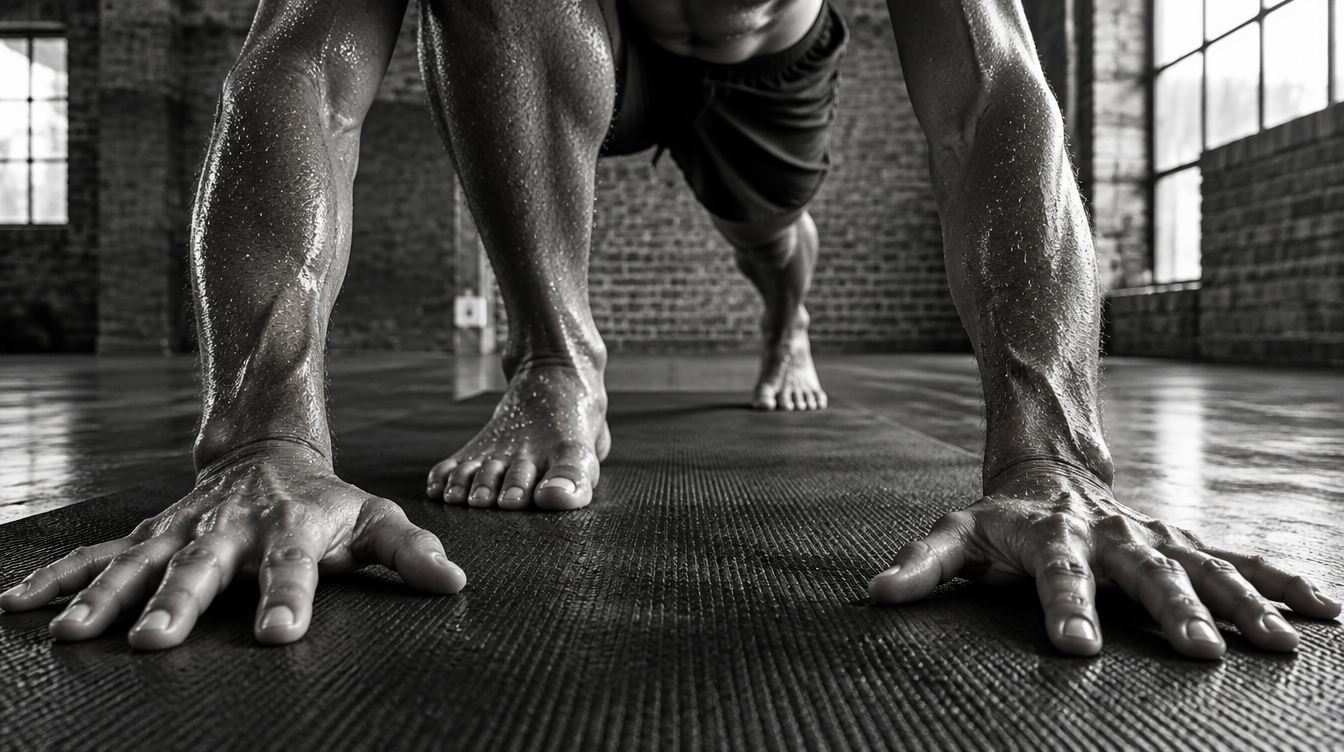
Your hands creep forward in downward dog. Your rear foot slides wider in warrior. Pressing harder buys a moment, then the movement starts again.
Treat this as a troubleshooting problem, not a test of commitment. Sweat, surface condition, towel movement, and how you load a pose can all matter. The useful fix depends on which part of the setup is losing traction.
First, identify what is actually slipping
When grip starts to go, come out of the pose rather than chasing the slide under load. Check three separate contact points:
- Skin against the practice surface: Your palms or soles move, but the towel and mat stay put.
- Towel against mat: The fabric shifts, wrinkles, or gathers beneath you.
- Mat against floor: The whole setup moves across the room.
These are different problems. Dampening a towel will not necessarily stop the mat beneath it moving. Changing your hand position will not remove oily residue.
Also notice when the slipping starts. A surface that feels slick before you sweat needs a different response from one that works at first and loses grip halfway through class.
If you slip before you start sweating
Check for residue first
Lotion, body oil, and product left on your palms or soles can interfere with grip. Wash and dry your hands before practice. If your feet feel coated with product, clean and dry them too.
Inspect the mat. A slick feel could reflect residue or the surface itself; it is not proof that the mat needs replacing. Clean it using the manufacturer's care instructions, including any required rinsing and drying.
Skip improvised grip treatments such as abrasive scrubbing or strong household cleaners unless the manufacturer explicitly permits them. Different surfaces have different care requirements. An aggressive cleaning experiment can leave you with a second problem.
Check whether your surface needs moisture
Some microfiber towels and fabric-topped mats are designed to develop more traction when slightly damp. They may feel less secure under dry hands at the beginning of class.
If the product instructions recommend pre-dampening, lightly mist the hand and foot contact areas. Test the surface with modest pressure before entering a demanding pose. The target is lightly damp, not soaked.
Do not apply that advice to every mat. Adding water to a surface that already gets slippery when wet can make the problem worse.
If grip disappears as you sweat
A mat that feels tacky when dry may behave differently once sweat collects on it. Dry grip and wet grip are separate purchasing considerations.
Keep a small towel within reach to blot your hands, feet, or visible moisture during a pause. That may be enough for occasional slipping. If the surface becomes slick again almost immediately, repeated wiping is probably not a workable solution for that class.
A purpose-built yoga towel is one option because it absorbs sweat and provides a different contact surface. Some moisture-responsive fabrics gain traction when damp, but that does not mean more water produces endlessly better grip. If a towel becomes saturated and starts feeling slick or moving, stop and reassess rather than adding another spray.
Claims about “moisture-activated” grip mainly come from manufacturers. They describe a product feature, not a guarantee across every sweat level, mat combination, or practitioner.
If the towel or mat moves underneath you
For a shifting towel, unload it first. Smooth out folds and check that it is oriented as intended. Some products use a designated underside, silicone backing, or corner pockets; others rely on fabric contact alone.
Make sure your hands and feet land fully on the intended contact surface rather than straddling a loose edge. During transitions, lift and place a foot instead of dragging it through the fabric.
If the entire mat slides, inspect the underside and the floor for moisture, dust, or cleaning residue. Ask the studio about a suitable spot or another mat if the problem persists. Adding more layers above a moving base does not address that contact point.
Adjust the pose without blaming your body
Technique can change how you load a surface. It cannot reliably compensate for poor traction.
Hands: spread pressure, then test
In downward dog, spread your fingers comfortably and press through the palm and finger pads rather than concentrating everything at the heel of the hand. Keep the fingers active without clawing desperately at the surface.
Bend your knees and let your hips move back to explore a less forward-loaded position. If your stance feels overstretched, test a slightly shorter distance between hands and feet. Make one small adjustment at a time; there is no universal stance length that solves slipping.
Feet: reduce the demand before adding effort
In a wide standing pose, shorten the stance if your feet keep creeping apart. Re-establish contact through the heel and both sides of the forefoot rather than rolling onto one edge to hang on.
Slow the transition enough to place the foot deliberately. Ask the teacher to check your position if you cannot find steady contact. If the issue includes pain rather than just slipping, consult a qualified professional instead of treating grip cues as treatment.
Takeaway: change one variable at a time
Use the timing of the slip to choose your next test: clean off residue, lightly dampen a compatible surface, manage accumulating sweat, secure a shifting layer, or reduce the demand of the pose.
Test that change before buying another accessory. If slipping persists across clean surfaces and reasonable position adjustments, look for equipment specifically described for wet use—not just “non-slip” in general—and check its care requirements and return terms. The useful standard is steady contact during your actual practice, not the strongest claim on the packaging.
Sources
- Non-Slip Yoga Towel for Hot Yoga and Flowweb / happyfaced.com
- Best Yoga Mat Towel for Hot Yoga: Improve Your Grip – Hugger Muggerweb / huggermugger.com
- How to Stop Hands Slipping on Yoga Mat: 5 Proven Tips – Hugger Muggerweb / huggermugger.com
- Stop Sweaty Hands Slipping on Yoga Mats: The Grip Guide | Yoga Design Labweb / yogadesignlab.com
Build a durable practice with Breath Metal, starting with gear that serves the work.
Get drop access