
Recovery Technology
Pneumatic Compression Boots: What Are You Actually Paying For?
Compression boots can make tired legs feel better. That is not the same as restoring performance. Here is how to judge the evidence, hardware and actual value.
September 25, 2026
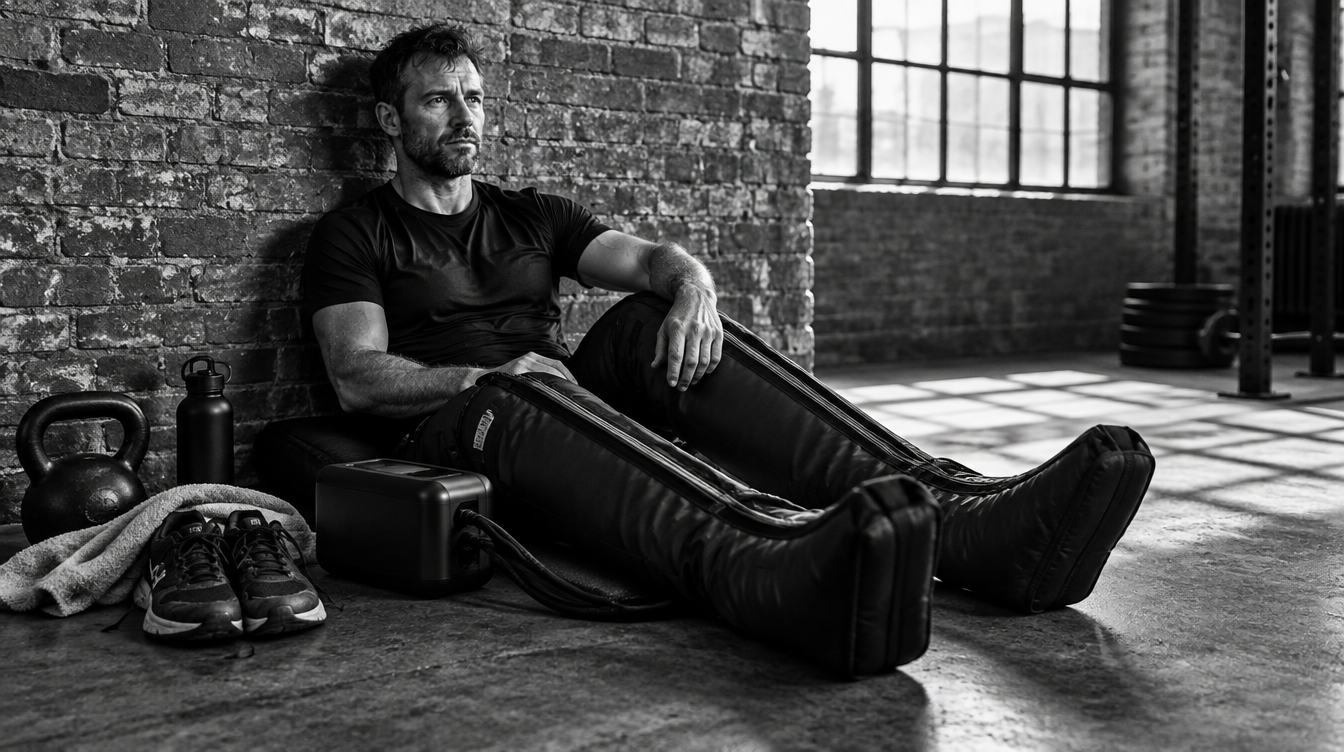
Compression boots sell an appealing deal: sit down, zip in, let a machine handle recovery. After heavy squats, a long run or a demanding week, that sounds useful.
The purchase becomes harder to judge when comfort gets packaged as faster muscle repair or better performance tomorrow. Those are different promises, and the evidence does not support them equally.
You are buying a squeezing mechanism, a particular user experience and convenient access to it. Whether that earns its place depends on what you expect the boots to do—and what owning them costs beyond the checkout total.
What the boots actually do
Pneumatic compression boots contain inflatable chambers connected to a pump. The chambers inflate and deflate, applying external pressure around your legs. Many systems sequence that pressure upward rather than squeezing the whole leg at once.
That distinguishes them from compression socks, which provide sustained pressure without a powered inflation cycle.
The mechanism can help move blood back toward the heart. But a plausible mechanism is not proof of a meaningful training benefit. “Changes circulation” and “restores your running pace sooner” are not interchangeable claims.
For the buyer, the useful question is narrower: does this device provide an outcome you notice and value enough to pay for?
Feeling better is the more defensible promise
Research reviews suggest pneumatic compression may offer modest benefits for perceived soreness after exercise. Results for restoring muscular function or athletic performance are less consistent.
That distinction matters. Legs feeling less sore can make the evening more comfortable. It does not establish that your strength, power or endurance has returned to baseline.
The evidence also comes from studies using different exercise tasks, participants and compression protocols. It does not identify one winning consumer device or establish that a premium model produces better recovery than a basic one.
A sensible expectation is possible relief from how sore your legs feel—not a dependable upgrade to tomorrow’s output. Comfort has value without being renamed accelerated repair.
What the price tag is buying
Consumer systems span a wide price range. Product testing coverage describes options below a hundred dollars and others above a thousand, but those products are not necessarily equivalent in coverage, construction or features.
Compare the actual package rather than the word “recovery” on the box.
Fit and coverage
Check the manufacturer’s leg-length and circumference guidance. Confirm whether the listed size refers to your inseam, overall height or another measurement.
Coverage also matters: a calf wrap is not the same product as a boot extending toward the upper thigh. More coverage may suit your preference, but it is not automatic evidence of better results.
During a trial, notice whether the sleeves sit where intended, whether fabric bunches behind the knee and whether you can get in and out without a wrestling match. An expensive system that fits poorly is a poor purchase.
Chambers and controls
More chambers can allow finer control over where and when the boot applies pressure. Adjustable zones and programs may make the experience more comfortable or convenient.
Treat those as hardware capabilities, not proof of superior recovery. The evidence for pneumatic compression as a category does not validate every branded sequence or extra setting.
Maximum pressure is a particularly weak shopping shortcut. A stronger squeeze is not an established route to a better outcome. Look for usable controls and clear instructions rather than the most aggressive specification.
Portability and setup
Compare external pumps and hoses with integrated designs. Check packed size, weight, battery requirements and whether the system needs an outlet during use.
A compact setup might justify extra cost if you travel regularly. If the boots will stay beside one chair, portability may add little value.
Pump noise, charging and storage are mundane details. They also determine whether a product gets used after its novelty wears off.
Service and ownership
Read the warranty and return terms before purchase. Check whether damaged sleeves, hoses, chargers or batteries can be replaced separately where applicable.
Confirm what is included. An attachment price is not necessarily the price of a complete working system.
Extra modes and bundled technologies deserve separate scrutiny. Evidence supporting pneumatic compression does not automatically support an added feature—or a higher price for combining them.
Try the experience before buying the promise
If a gym or local facility offers a trial, use it to assess the experience rather than treating one good session as proof of recovery.
Use the device according to its instructions. Notice fit, pressure comfort, noise and setup effort. Ask whether you would still want to use it on an ordinary training night, not just after an unusually hard event.
Keep the practical questions separate:
- Did your legs feel more comfortable afterward?
- Was the setup easy enough to repeat?
- Did your next training session actually feel or perform differently?
A personal trial can answer whether you like the product. It cannot reliably separate the device’s effects from expectations, ordinary recovery or simply sitting quietly. That limitation does not make the experience worthless; it keeps the claim honest.
For pain, unexplained swelling or questions about suitability with a medical condition, consult a qualified healthcare professional rather than using boots to test what is wrong.
Grounded takeaway: buy comfort, not permission to push harder
Compression boots are easiest to justify when you enjoy the sensation, expect to use them regularly and can afford them without squeezing out sleep time, adequate food or sensible training decisions.
Estimate cost per realistic use, not imagined daily use. Include storage, setup and any paid access fees in the comparison. Occasional access may make more sense than ownership.
Pass if the purchase only feels worthwhile under the assumption that it will restore performance faster. Current evidence is too uncertain for that promise to carry an expensive buying decision.
The strongest case is simpler: a well-fitting, convenient device that may make sore legs feel better. Pay for that experience if it matters to you—not for the suggestion that a machine has erased the work your body still needs to recover from.
Sources
- Intermittent pneumatic compression boots for post-exercise recoveryweb / sports-injury-physio.com
- Pneumatic compression for runnersweb / veohtu.com
- What Are Compression Boots — And How Do They Work?web / nike.com
- Expert-Tested: Best Compression Boots (2026) | Garage Gym Reviewsweb / garagegymreviews.com
Build a durable practice with tools that earn their place.
Get drop access